
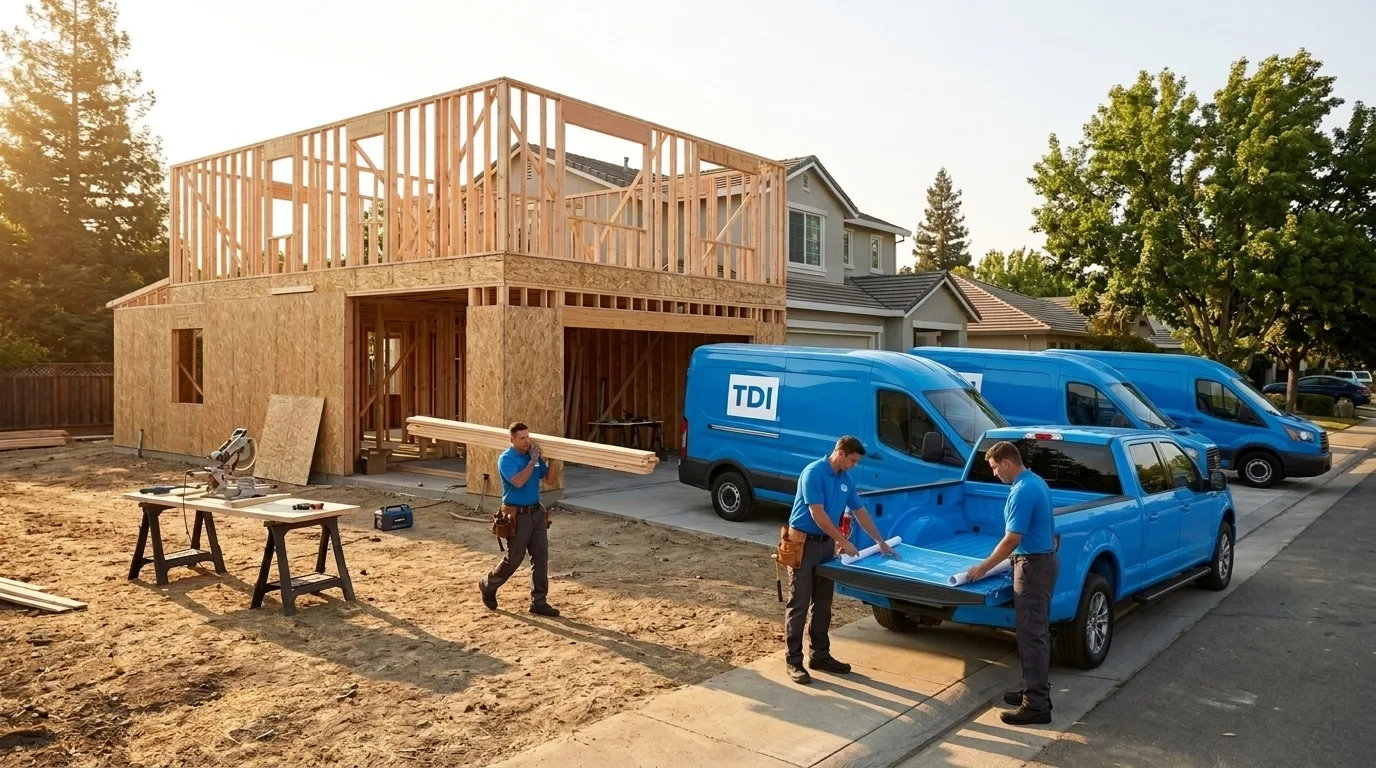
TL;DR: A general contractor (GC) is the single point of responsibility on a construction project. They pull permits, hire and schedule subcontractors, coordinate inspections, manage the budget timeline, and hand you a finished project backed by a warranty. You hire one when a project involves multiple trades, requires permits, or is too complex to self-manage without risking code violations, cost overruns, or serious liability.
If you’re staring at a project that involves a plumber, an electrician, a framer, and a tile setter, all working in a sequence that has to be right or someone has to tear out finished work, you’re describing a job that needs a general contractor. The GC is the person who makes sure the plumber finishes before the drywaller shows up, that the inspector signs off before the walls close, and that when something goes sideways (and something always does), there’s one accountable professional to call.
What is a general contractor responsible for?
A general contractor is legally and contractually responsible for delivering a completed scope of work on time, to code, and within the agreed budget. That covers everything from the first permit application to the final punch-list walkthrough, not just swinging a hammer.
Here’s what that looks like in practice:
| Responsibility | What it actually means |
|---|---|
| Permits | Pulls the required building permits before work starts; knows which projects trigger which permit types under local code |
| Subcontractor management | Hires, vets, schedules, and pays licensed subs (electricians, plumbers, HVAC, tile, etc.) |
| Scheduling | Sequences the trades so each phase is complete before the next begins, framing before insulation, rough-in before drywall |
| Inspections | Coordinates with the building department for each required inspection; corrects any deficiencies before proceeding |
| Budget tracking | Manages the project budget, issues change orders when scope shifts, and accounts for materials and labor costs |
| Site safety | Maintains a safe, organized jobsite compliant with OSHA standards |
| Warranty | Stands behind the finished work, typically a one-year workmanship warranty at minimum, with longer manufacturer warranties on specific materials |
The GC doesn’t necessarily do every trade themselves. What they do is own the outcome across all of them.
Do I need a general contractor for a remodel?
You need a general contractor any time your project crosses trade lines, requires permits, or involves structural work. For a single-trade job, painting a room, replacing a faucet, a specialty contractor is enough. Once you’re moving walls, adding square footage, or touching electrical and plumbing in the same project, a GC becomes the practical and often legal requirement.
A few specific triggers:
Permits are required. In California, most projects that alter the structure, electrical, plumbing, or HVAC of a home require a building permit. A licensed GC pulls those permits in their name and carries the liability for code compliance. If you hire unlicensed labor or pull permits yourself without the expertise to meet inspection, you’re on the hook for any deficiencies, and they can surface at resale.
Multiple trades are involved. A kitchen remodel typically involves demo, rough carpentry, electrical, plumbing, drywall, tile, cabinet installation, and finish work. Coordinating six different specialty contractors yourself, in the right sequence, while managing your day job, is a full-time project management role. The GC’s fee covers that coordination, and the cost of getting it wrong.
Structural changes are on the table. Opening a wall, adding a room addition, or building a garage involves load calculations, engineered drawings, and inspections at multiple stages. This is not DIY territory, and it’s not single-trade territory either. It’s general contracting work.
For straightforward home remodeling projects that span multiple trades, hiring a licensed GC is the difference between a project that finishes on schedule and one that stalls for months waiting on a sub who never shows.
What does a general contractor do during a project, step by step?
The GC’s work starts before the first tool comes out and ends after the last inspection is signed.
1. Pre-construction planning. The GC reviews the project scope, works with architects or designers if drawings are needed, and produces a detailed estimate. They identify permit requirements, lead times for specialty materials, and any site conditions that could affect the schedule.
2. Permitting. The GC submits permit applications to the local building department. In California, this means working within the jurisdiction’s plan-check process, which can take days to weeks depending on the project size and the city’s current workload. Work doesn’t start until permits are approved and posted on site.
3. Subcontractor coordination. The GC contracts with licensed specialty subs for each trade. A reputable GC has established relationships with plumbers, electricians, HVAC techs, and finish trades they trust. They schedule each sub in the right sequence and hold them accountable to the project timeline.
4. Active construction management. The GC (or their superintendent) is on site regularly, checking work quality, resolving field conditions, managing material deliveries, and keeping the schedule. When a sub finds something unexpected (rotted framing behind a wall, undersized wiring in an older home), the GC evaluates the impact, documents it, and issues a change order if the scope shifts.
5. Inspections. At each required stage, foundation, framing, rough-in, insulation, final, the GC schedules the building inspector and walks the inspection with them. If corrections are needed, the GC coordinates the fix and re-inspection before work proceeds.
6. Punch list and closeout. Near completion, the GC and homeowner walk the project together and document anything that needs correction, a paint touch-up, a cabinet door that doesn’t close flush, a missing trim piece. The GC addresses the list before final payment and provides the certificate of occupancy (if applicable) and any manufacturer warranty documentation.
See also: How To Plan a Home Remodel: A Step-by-Step Guide for how this process maps to a typical residential remodel timeline.
Is a general contractor license required in California?
Yes. In California, any contractor performing work valued at $500 or more in combined labor and materials must hold a valid license issued by the Contractors State License Board (CSLB). This applies to general contractors and specialty contractors alike.
For general contracting work, the relevant license classifications are:
- Class B, General Building Contractor: Authorizes a contractor to take on projects involving framing and two or more unrelated trades (e.g., electrical and plumbing in the same project). This is the classification held by most residential and commercial GCs in California.
- Class A, General Engineering Contractor: Covers infrastructure and heavy civil work.
- Specialty (C) licenses: Cover individual trades, C-10 for electrical, C-36 for plumbing, C-20 for HVAC, and so on.
A Class B license holder can self-perform framing and carpentry and can subcontract specialty trades. They cannot self-perform specialty work (like electrical or plumbing) without also holding the relevant C license.
How to verify a contractor’s license in California: Go to the CSLB license check tool at cslb.ca.gov and search by license number or business name. The result will show the license classification, expiration date, bonding status, insurance status, and any disciplinary actions. Do this before signing any contract, it takes 60 seconds and it’s the single most important due-diligence step a homeowner can take.
Hiring an unlicensed contractor in California carries real consequences: you may be unable to collect on a claim if something goes wrong, the work may not pass inspection, and your homeowner’s insurance may deny a related claim. The CSLB also notes that unlicensed contractors are one of the top sources of consumer complaints in the state.
For more on what to ask before you sign, see 15 Questions To Ask a Contractor Before Signing a Construction Contract.
What should I do before hiring a general contractor?
Before you hire, get three things in order: a clear scope, a verified license, and a written contract.
Define the scope first. The more specific you are about what you want, the more accurate and comparable your bids will be. Vague scopes produce wide bid ranges, not because contractors are guessing, but because they’re pricing different things. If you’re planning a kitchen remodel, know the approximate square footage, whether you’re moving plumbing or electrical, and what finish level you’re targeting before you call anyone.
Verify the license. Use the CSLB lookup. Confirm the license is active, the classification matches the work, and there are no open complaints or disciplinary actions.
Get a written contract. California law requires a written contract for any home improvement project over $500. The contract should specify the scope of work, payment schedule, start and completion dates, change-order process, and warranty terms. Never pay more than 10% down or $1,000 (whichever is less) as a deposit on a home improvement contract in California, that’s the legal limit under the CSLB’s consumer protections.
If you’re comparing bids and they’re coming back thousands of dollars apart, read How To Choose a General Contractor before you decide on price alone.
For projects in the Sacramento region and surrounding areas, TDI USA, Inc. handles general contracting across residential and commercial work, from kitchen and bathroom remodels to room additions and new construction. Licensed and insured, with more than 40 years of construction experience in California.
About TDI USA, Inc.
TDI USA, Inc. is a licensed and insured general contractor based in Sacramento, CA, serving homeowners and commercial clients throughout the region since 1985. With more than 40 years of construction and rebuilding experience, their crews handle general contracting, home remodeling, room additions, new construction, and insurance rebuilds across Sacramento, Roseville, Folsom, Elk Grove, and surrounding communities. TDI USA holds a California contractor’s license and carries full general liability and workers’ compensation coverage.